Bitcoin Hits $80K — But Nobody Believes It

The Hook
$80,000 is back on the board — and almost nobody trusts it.
That’s the strange paradox sitting at the center of Bitcoin’s latest recovery. The number is real. The rally is technically happening. But beneath the headline price, the market’s body language tells a completely different story — one of hedged bets, skeptical traders, and a crowd that’s showing up to the party while quietly keeping a hand on the exit door.
Here’s the setup: Bitcoin has clawed back above $80,000, lifted by a combination of strong ETF inflows and rising leverage in the derivatives market. On the surface, that looks like momentum. Capital is moving in. Positions are being built. The number is going up.
But here’s what most miss: a price can climb a wall of money and still be standing on sand. When the buyers are leveraged speculators rather than genuine spot demand — people actually buying and holding Bitcoin because they believe in the price — the foundation of that rally is a lot shakier than the chart suggests.
CryptoQuant data is flashing exactly that warning. Spot demand, the cleanest signal of real conviction in the market, is weak. Meanwhile, Polymarket — the prediction market where traders put actual money behind their forecasts — is pricing just a 23% chance that Bitcoin hits $90,000 before the end of the month.
That’s not a bull market. That’s a bull market cosplay.
What’s Behind It
The money coming in isn’t all equal
Not all capital flows are created the same, and right now Bitcoin is learning that lesson in real time.
ETF inflows are genuinely strong. That part of the story is legitimate. Since spot Bitcoin ETFs launched in the United States, they’ve become a meaningful on-ramp for institutional and retail capital that previously had no clean way to access crypto exposure. When those inflows build, they create real buying pressure — custodians have to acquire actual Bitcoin to back the shares being purchased.
So far, so bullish.
The problem is what’s happening alongside those ETF flows: rising leverage. Traders in the derivatives market are taking on larger and larger positions, amplifying their exposure to price moves in both directions. Leverage is not inherently evil — it’s a tool. But when it accumulates rapidly during a price recovery, it creates a market that’s increasingly brittle.
One sharp move down, and forced liquidations can turn a modest pullback into a cascade. The leveraged longs become sellers. Their exits push the price lower. More liquidations trigger. It’s a self-reinforcing unwind, and it’s happened to Bitcoin more times than the crypto faithful like to remember.
The irony is that rising leverage can itself push prices higher in the short term — all those leveraged long positions are, in effect, synthetic demand. But it’s borrowed demand. And borrowed demand has an expiration date.
Strong inflows and rising leverage aren’t the same as conviction — one is capital, the other is a countdown clock.
What CryptoQuant is actually telling us
CryptoQuant has become one of the most closely watched on-chain analytics platforms for a reason: it cuts through price action and looks at what Bitcoin is actually doing on the blockchain — where it’s moving, who’s holding it, and whether real buyers are stepping in.
Right now, the data is not flattering to the bulls.
Weak spot demand means that despite the price recovery above $80,000, there isn’t a surge of organic buyers accumulating Bitcoin at these levels. In a healthy bull run, you’d expect to see robust spot market activity — people and institutions buying Bitcoin outright, moving it into long-term storage, reducing the liquid supply available on exchanges.
That’s not what’s happening here. Instead, the price is being levitated by ETF mechanics and derivatives positioning. Both are real market forces, but neither reflects the kind of deep, distributed conviction that has historically underpinned Bitcoin’s most durable rallies.
The distinction matters enormously. A price supported by spot buyers is sticky — those holders typically don’t sell at the first sign of turbulence. A price supported by leveraged derivatives is fragile — those positions can be unwound in minutes, not months. Bitcoin’s current price action may look strong on a chart, but the structural underpinning is considerably less solid than the number implies.
Why It Matters
When the crowd hedges, the signal is the hedge
There’s a behavioral tell hiding inside this rally, and it’s more revealing than any price chart.
Traders are hedging. That single word carries enormous weight. In a genuinely euphoric bull market — the kind that produces parabolic moves and mainstream headlines about cryptocurrency millionaires — traders don’t hedge. They go all in. They dismiss risk. They tell you that this time is different and mean it with their entire portfolio.
The fact that sophisticated market participants are currently building hedged positions while Bitcoin trades above $80,000 tells you something critical about the prevailing mood: even the people positioned for upside don’t fully believe in the upside. They’re buying the rally and buying protection against the rally failing simultaneously. That’s not greed. That’s controlled optimism, which is a very different psychological regime.
This matters because market psychology is self-fulfilling. A crowd that’s hedged will sell quickly when prices wobble — their downside protection becomes a reason to exit rather than hold. A crowd that’s all-in tends to hold through dips because they have no hedge to trigger. The current setup, structurally, favors sellers over hodlers if the price starts moving the wrong way.
The prudent read isn’t that a crash is imminent. It’s that the path to $90,000 is considerably more contested than the headline number of $80,000 might suggest to a casual observer.
The Polymarket number that should humble every bull
Polymarket‘s 23% probability on Bitcoin reaching $90,000 this month deserves more attention than it’s getting.
Prediction markets are, in theory, among the most efficient aggregators of distributed information and opinion. Participants aren’t just talking — they’re betting real money on outcomes. That financial skin in the game tends to filter out noise and wishful thinking in ways that analyst price targets and social media sentiment simply cannot.
A 23% probability is not a forecast of failure. Markets are probabilistic; even a 23% outcome happens roughly one in four times. But context matters. At $80,000, Bitcoin would need to climb another $10,000 — a 12.5% move — to reach $90,000. For an asset as volatile as Bitcoin, that’s not an outrageous distance.
The fact that informed bettors are pricing it at less than one-in-four odds suggests something meaningful: the market sees genuine headwinds, not just noise. The combination of weak spot demand flagged by CryptoQuant, elevated leverage creating fragility, and traders actively hedging their exposure adds up to a market that respects the resistance ahead rather than dismissing it.
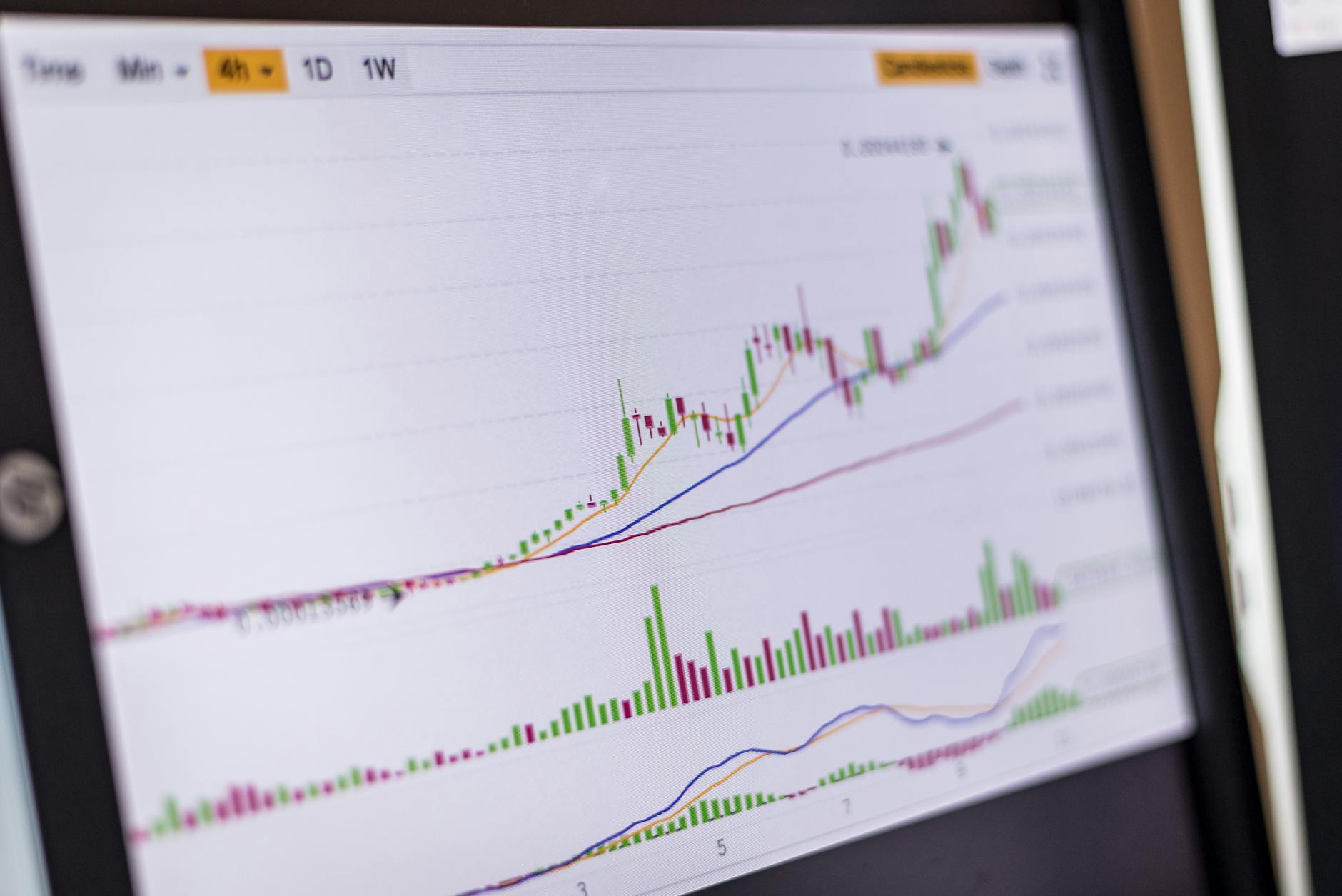
Here’s the counterintuitive read: watching these signals on crypto charts could be more valuable than watching the price itself. The price is the output. The flows, the positioning, and the on-chain data are the inputs — and right now, the inputs are telling a cautious story.
- ETF inflows are real and meaningful, but they’re not sufficient on their own to sustain a breakout without spot market backing
- Rising leverage amplifies upside in the short term while building fragility into the structure of the rally
- Weak spot demand (per CryptoQuant) signals a lack of deep conviction buyers accumulating at current levels
- Trader hedging reveals that even the bullish camp is managing downside risk, not ignoring it
- Polymarket odds at 23% for $90,000 reflect informed, financially-staked skepticism — not casual pessimism
What to Watch
The price of Bitcoin above $80,000 is a headline. What happens next will be determined by the data points that rarely make headlines.
If this rally is going to evolve from a technically-driven bounce into something more durable — the kind of move that actually challenges $90,000 and eventually tests prior all-time highs — the market will need to show specific improvements in its underlying structure. Without them, the rally remains a fragile construct, vulnerable to the very leverage that helped build it.
Here’s what deserves close attention in the days and weeks ahead:
- Spot demand recovery: Watch CryptoQuant’s on-chain indicators for signs that genuine spot buyers are accumulating Bitcoin — not just ETF flows or derivatives positioning pushing the price
- Leverage levels: Rising open interest alongside a rising price is a warning sign; rising price with stable or declining leverage would signal healthier, more sustainable momentum
- ETF inflow consistency: Strong ETF flows need to continue and ideally accelerate — a single week of outflows would undercut the bull narrative quickly given how much weight it currently carries
- Polymarket probability shift: If the Polymarket odds on $90,000 this month start climbing meaningfully above 23%, it signals that informed bettors are reassessing the trajectory — a leading indicator worth tracking
- Trader hedging behavior: Any meaningful reduction in hedged positioning among derivatives traders would suggest growing conviction — right now, the hedges are the story
The broader picture here is a market at an inflection point that hasn’t yet committed to a direction. $80,000 has been reclaimed, which matters psychologically and technically. But markets don’t care about round numbers as much as they care about the forces underneath them.
Bitcoin has been here before — technically recovered, structurally uncertain, with one camp calling the bottom and another positioning for another leg down. What’s different this time is the sophistication of the tools available to read the tea leaves in real time: on-chain analytics through CryptoQuant, prediction market pricing through Polymarket, and ETF flow data that provides an unprecedented window into institutional behavior.
The information is available. The signals are mixed. The only honest conclusion is that this market has not yet decided — and the next decisive move will belong to whichever force, spot demand or leveraged exits, blinks first.
Stay Ahead of the Market
Get our daily finance briefing — sharp insights from 16 trusted sources, delivered free.
