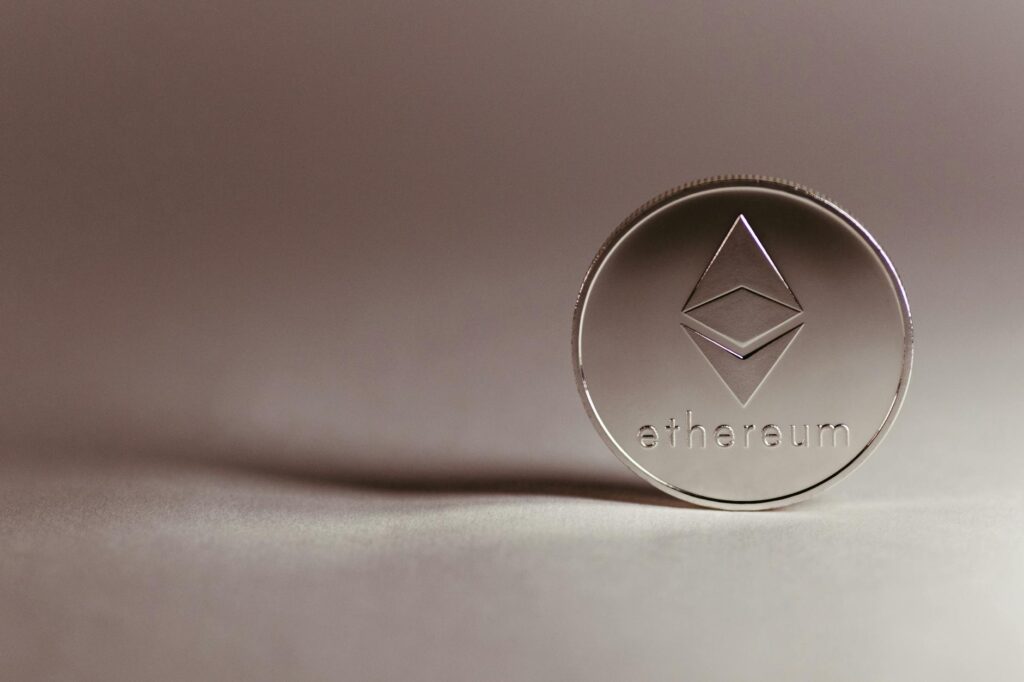
Stablecoins Beat Bitcoin in Latin America — Here’s Why
The Hook
Bitcoin didn’t win Latin America. The dollar did — just in a different costume.
A new report from Bitso, one of Latin America’s leading crypto exchanges, reveals a seismic shift in how the region’s users are actually spending their crypto budgets: stablecoins — digital tokens pegged to the US dollar — have overtaken Bitcoin as the dominant crypto purchase across Latin America’s inflation-battered economies.
Let that land for a second. This is the region that crypto evangelists have spent years holding up as Bitcoin’s natural home — a place where volatile national currencies and limited banking access were supposed to make the original cryptocurrency a no-brainer. The pitch was elegant: give people in Argentina, Mexico, or Venezuela access to a decentralized, borderless store of value and watch adoption explode.
The people listened. Then they quietly chose the dollar instead.
Not the physical greenback gathering dust under a mattress. Not a wire transfer crawling through correspondent banks. A digital, instantly transferable, dollar-linked token that anyone with a smartphone can hold, send, and spend — without asking permission from a government that’s busy printing its currency into oblivion.
This isn’t a story about crypto speculation cooling off. It’s a story about what people actually need from money when the system around them is broken. And Bitso’s data suggests the answer, at least right now, is stability over upside — utility over ideology.
What’s Behind It
When inflation makes Bitcoin feel risky
Here’s the paradox nobody in the crypto industry wants to say out loud: in economies defined by runaway inflation, Bitcoin’s own volatility becomes a dealbreaker.
Think about it from the perspective of a small business owner in a country where the local currency loses purchasing power week over week. You’re not looking for an asset that might double — or halve — in a matter of months. You’re looking for a place to park value that won’t evaporate before you pay next month’s rent or suppliers. Bitcoin, for all its long-term upside narrative, simply doesn’t offer that guarantee on a short time horizon.
Dollar-linked stablecoins do. They sit at a near-permanent $1.00, give or take fractions of a cent. For someone fleeing peso devaluation or bolivar collapse, that flat line on a price chart isn’t boring — it’s the whole point.
This is the reality Bitso’s report is capturing. Across Latin America’s inflation-hit economies, users aren’t abandoning crypto — they’re using it with ruthless pragmatism. Stablecoins have become the region’s de facto digital dollar account, accessible to anyone with an internet connection and a Bitso wallet, no US bank account required.
In the world’s most inflation-scarred markets, the boring flat line is the most radical financial tool of all.
The infrastructure play hiding in plain sight
But here’s what most miss when they read “stablecoins surpass Bitcoin” as a headline: this isn’t just a sentiment shift. It’s an infrastructure story.
The rise of stablecoin usage across Latin America signals that the underlying rails — wallets, exchanges, on-ramps, payment integrations — have matured enough to support genuine everyday financial behavior. People aren’t buying stablecoins to speculate. They’re using them to save, to send remittances across borders, and increasingly, to transact in ways that the traditional banking system either can’t serve or won’t bother to.
Latin America has historically been one of the world’s largest corridors for remittance flows, with workers sending billions home from the United States and elsewhere every year. Traditional remittance providers charge fees that eat into those transfers significantly. Bitso’s findings suggest that stablecoins are increasingly filling that gap — offering a faster, cheaper alternative that settles in dollars on the receiving end.
That’s not a crypto use case. That’s a financial inclusion use case wearing crypto clothes. And the distinction matters enormously for where this goes next.
Why It Matters
The Bitcoin narrative takes a real hit
For years, the bull case for Bitcoin in emerging markets rested on a specific story: that populations suffering under weak, mismanaged currencies would naturally gravitate toward a scarce, decentralized alternative. El Salvador even made it legal tender, betting the country’s financial modernization on that thesis.
The Bitso data complicates that story significantly. It doesn’t kill Bitcoin’s long-term value proposition — plenty of Latin American users still hold it as a speculative or savings asset. But it does suggest that when given a choice, everyday users are prioritizing dollar stability over crypto ideology. The “Bitcoin fixes this” crowd may need to reckon with the possibility that for most people, stablecoins fix it better — at least in the short run.
This has real implications for how exchanges, builders, and policymakers think about crypto adoption in the developing world. If the primary use case is dollar access rather than Bitcoin accumulation, the products, interfaces, and regulations that need to exist look very different from what the Bitcoin-maximalist playbook assumes.
It also repositions Bitso as something more than a crypto exchange — it frames the company as a gateway to dollar-denominated financial services for the underbanked, which is a fundamentally different and arguably more durable business model.
Winners, losers, and the broader ripple
The shift toward stablecoins as the dominant purchase on platforms like Bitso creates a clear set of implications worth mapping out:
- Stablecoin issuers gain leverage and legitimacy as demand from emerging markets accelerates beyond speculative trading volumes.
- Bitcoin’s regional narrative loses its cleanest real-world validation case, adding ammunition to critics who argue BTC is too volatile for daily financial use.
- Traditional remittance corridors face intensifying disruption as stablecoin-based transfers offer dollar-denominated value transfer at lower cost and higher speed.
- Latin American regulators will be forced to accelerate stablecoin-specific policy frameworks — the usage data is now too large to govern through vague crypto guidelines.
- Crypto exchanges serving the region must rethink product design around stability features, dollar-yield products, and payment integrations rather than pure trading interfaces.
The through-line here is that stablecoin market dynamics in Latin America are no longer a footnote — they’re becoming the main event in one of crypto’s most strategically important growth regions.
What to Watch
This Bitso report is a data snapshot, not a destination. The real story is still unfolding — and the next twelve months will determine whether this stablecoin dominance is a durable structural shift or a temporary hedge against a particularly rough inflation cycle.
Here are the specific signals worth tracking closely:
- Stablecoin transaction volumes on Bitso — if the gap between stablecoin and Bitcoin purchases widens further, it confirms a structural shift rather than a cyclical dip in BTC appetite.
- Regulatory moves in Mexico, Argentina, and Brazil — these are the region’s largest crypto markets, and stablecoin-specific legislation in any of them would either accelerate or dramatically complicate adoption curves.
- Remittance corridor data — watch for official or third-party data on what percentage of cross-border flows in key Latin American corridors are moving via stablecoin rails versus legacy providers.
- Dollar-yield product launches — if exchanges operating in Latin America begin offering interest-bearing stablecoin accounts, it signals the market is maturing from “store of value” to “financial product,” which changes the regulatory and competitive landscape entirely.
- Bitcoin price correlation — paradoxically, if Bitcoin enters a sustained bull run, some portion of stablecoin buyers may rotate back into BTC for upside exposure. Watching whether stablecoin dominance holds during a BTC rally would be genuinely revealing about how permanent this behavioral shift is.
The broader macro context matters too. Latin America’s inflation crises didn’t appear overnight, and they won’t resolve overnight. As long as local currencies remain structurally weak and central banks lack credibility, the demand for a digital dollar alternative will stay elevated — and stablecoins will keep filling that vacuum more efficiently than Bitcoin can.
What Bitso has documented isn’t the death of Bitcoin in Latin America. It’s the rise of something arguably more powerful: a crypto use case that doesn’t require users to believe in anything — just to need a better dollar. Track how these dynamics play out in real-time crypto markets as the region’s adoption story continues to evolve.
The evangelists sold Latin America on financial freedom through decentralization. The users bought something simpler: access to a stable currency in a region where stability is the rarest commodity of all.
Stay Ahead of the Market
Get our daily finance briefing — sharp insights from 16 trusted sources, delivered free.