Fed Holds Rates: What the FOMC Isn’t Saying

The Hook
The most powerful sentence in American finance isn’t a tweet, a earnings call, or a Treasury auction result — it’s a single FOMC statement dropped without fanfare on a Wednesday afternoon. And on March 18, 2026, the Federal Reserve did exactly that.
In the world of central banking, silence is a policy tool. What the Fed chooses not to say often moves markets more than what it does. And the March 2026 FOMC monetary policy statement is no exception — it lands at a moment when investors, traders, and everyday Americans carrying credit card debt or floating-rate mortgages are desperately hungry for direction.
The Federal Open Market Committee meets eight times a year. Most of those meetings get a shrug from Main Street. But every so often, one lands in a moment so economically charged that every word gets parsed like ancient scripture. This is one of those moments.
We’re in a macro environment where the tension between stubborn inflation, a labor market that refuses to crack, and the political pressure to cut rates has created the kind of slow-burn drama that doesn’t make for great headlines — until suddenly it does. The March 2026 statement is the Fed drawing a line, or choosing not to. Either way, that choice has consequences that ripple far beyond the Eccles Building in Washington, D.C.
Here’s what you need to understand about what just happened, why it happened now, and what it means for your money.
What’s Behind It
Why the Fed speaks in code — and why it works
The Federal Reserve doesn’t issue press releases the way a corporation announces a new product. Every word in an FOMC statement goes through multiple drafts, multiple votes, and multiple interpretations before it ever reaches the public. That’s not bureaucratic inefficiency — that’s deliberate architecture.
Central bankers figured out decades ago that expectation management is as powerful as actual rate moves. If markets believe the Fed will hold rates steady, they behave accordingly — equities stabilize, bond yields find a floor, borrowing costs level off. The statement itself becomes the policy, before any actual levers get pulled.
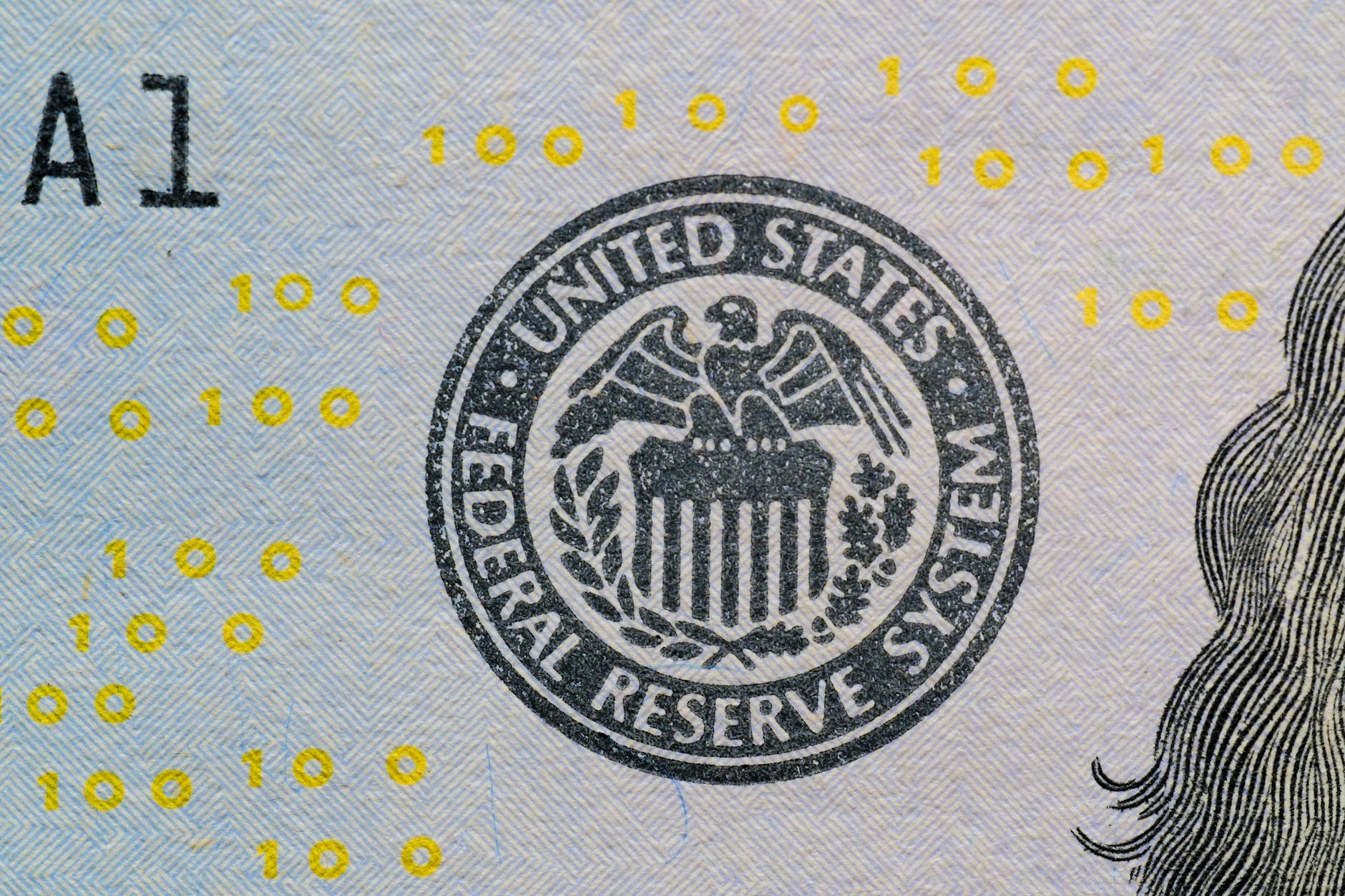
The March 18, 2026 release follows that exact playbook. Issued through the Federal Reserve’s official press release channel, it represents the collective judgment of the FOMC — a body made up of the seven members of the Board of Governors and five of the twelve regional Federal Reserve Bank presidents, rotating on an annual schedule.
What makes this particular statement worth close attention is the timing. We’re deep into a rate cycle that has already reshaped the American economic landscape. Mortgage rates, business loan costs, and consumer credit pricing have all been recalibrated by the Fed’s prior moves. Every new statement either validates those recalibrations — or upends them.
The Fed’s real power isn’t in raising rates — it’s in making you believe it might.
The mechanics behind a single statement
Here’s something most financial coverage glosses over: the FOMC statement isn’t just a summary of a decision. It’s a forward-looking signal system, engineered for a specific audience — and that audience isn’t you, it’s the bond market.
When the Fed tweaks a single adjective — say, changing “solid” to “moderate” when describing economic activity — that’s not imprecision. That’s a precisely calibrated shift in language designed to move yield curves, reprice risk assets, and communicate a new modal path for policy without having to actually do anything yet.
The Federal Reserve’s communications framework has evolved dramatically since the era of Alan Greenspan’s deliberately opaque “Fed-speak.” Modern FOMC statements are built for transparency in theory — but they remain deeply technical in practice.
For investors, the key is less about what the statement says and more about what changed since the last one. Traders keep running comparisons between consecutive statements, hunting for word-level changes that telegraph the next move. Right now, those comparisons are telling a story — and the March 2026 version adds another chapter.
Why It Matters
The rates you live with every day start here
It’s easy to think of the FOMC as an abstraction — twelve people in suits making arcane decisions in a conference room. But the downstream effects of a single statement touch the financial lives of nearly every American household.
The federal funds rate — the rate the Fed targets through its open market operations — is the north star for virtually all consumer and commercial borrowing costs. When the Fed moves that rate, or signals it might, the entire credit ecosystem adjusts. Your credit card APR, your home equity line, your small business loan — all of them are priced off benchmarks that respond to the FOMC’s posture.
That’s not a metaphor. That’s a mechanism.
At the macro level, the March 2026 statement arrives in a moment of genuine uncertainty. The labor market has remained remarkably resilient despite elevated rates — a dynamic that has repeatedly confounded the models suggesting rate hikes would cool hiring more aggressively. Meanwhile, inflation, while no longer at its peak crisis levels, hasn’t returned cleanly to the Fed’s 2% target in a way that would give the committee full confidence to pivot.
The result is a Fed that is, in every sense of the phrase, data-dependent — and telling markets to be patient.
What investors are actually pricing in right now
The smart money has been running its own probability models on Fed rate paths for months. Futures markets have become a kind of shadow vote on what the FOMC will do before the committee even meets — and those markets are sensitive to every data point that lands between meetings.
What the March 2026 statement does, in practical terms, is either confirm or disrupt the prevailing rate-path consensus that traders have baked into asset prices. If the language is more hawkish than expected, expect a bond selloff and a stronger dollar. If it leans dovish, rate-sensitive sectors — think real estate, utilities, and growth equities — could see relief.
- Bond markets will reprice duration risk within hours of the statement’s release
- Equity investors in rate-sensitive sectors face immediate recalibration
- Currency traders watch the dollar index for the Fed’s implicit signal on capital flows
- Mortgage borrowers will feel the downstream effect within weeks as lenders adjust rate sheets
- Small business owners with variable-rate credit lines face immediate cost changes
This isn’t speculation. This is the transmission mechanism of monetary policy, playing out in real time.
What to Watch
The March 18, 2026 FOMC statement is a data point, not a destination. Smart readers and investors won’t just process what it says — they’ll use it as a roadmap for what comes next. Here are the specific signals worth tracking in the weeks and months ahead.
The Fed’s next scheduled FOMC meeting will be the first real test of whether the March statement represented a true pause, a pivot setup, or a holding action ahead of more data. Watch the calendar — and watch what committee members say in public appearances between now and that meeting. Fed governors and regional bank presidents give speeches constantly, and those speeches often function as trial balloons for policy shifts.
Pay close attention to the FRED economic database, which aggregates the real-time data the Fed itself monitors. The two indicators that matter most right now: the month-over-month core PCE inflation reading (the Fed’s preferred inflation gauge), and the monthly nonfarm payrolls report from the Bureau of Labor Statistics. Together, these two data series will either validate or challenge whatever posture the March statement established.
- Core PCE inflation — any print above the Fed’s comfort zone reopens the hawkish case
- Nonfarm payrolls — a surprisingly strong number makes cuts less urgent; a miss accelerates the timeline
- Fed Chair public appearances — press conferences and Congressional testimony often carry more signal than the statements themselves
- Treasury yield curve — watch the spread between 2-year and 10-year yields for the market’s implicit rate-path view
But here’s what most miss: the real signal isn’t any single data point. It’s the pattern. The Fed is watching for confirmation that its prior moves have done their work — that inflation is durably returning to target without a hard landing in growth or employment. Until that confirmation arrives, every FOMC statement will read like a carefully managed hedge.
The March 2026 statement is the Fed saying: we haven’t lost control of the story. The question is whether the data in the next 60 days lets them keep telling it.
Stay Ahead of the Market
Get our daily finance briefing — sharp insights from 16 trusted sources, delivered free.