Kevin Warsh Is Now Fed Chair — What Changes?
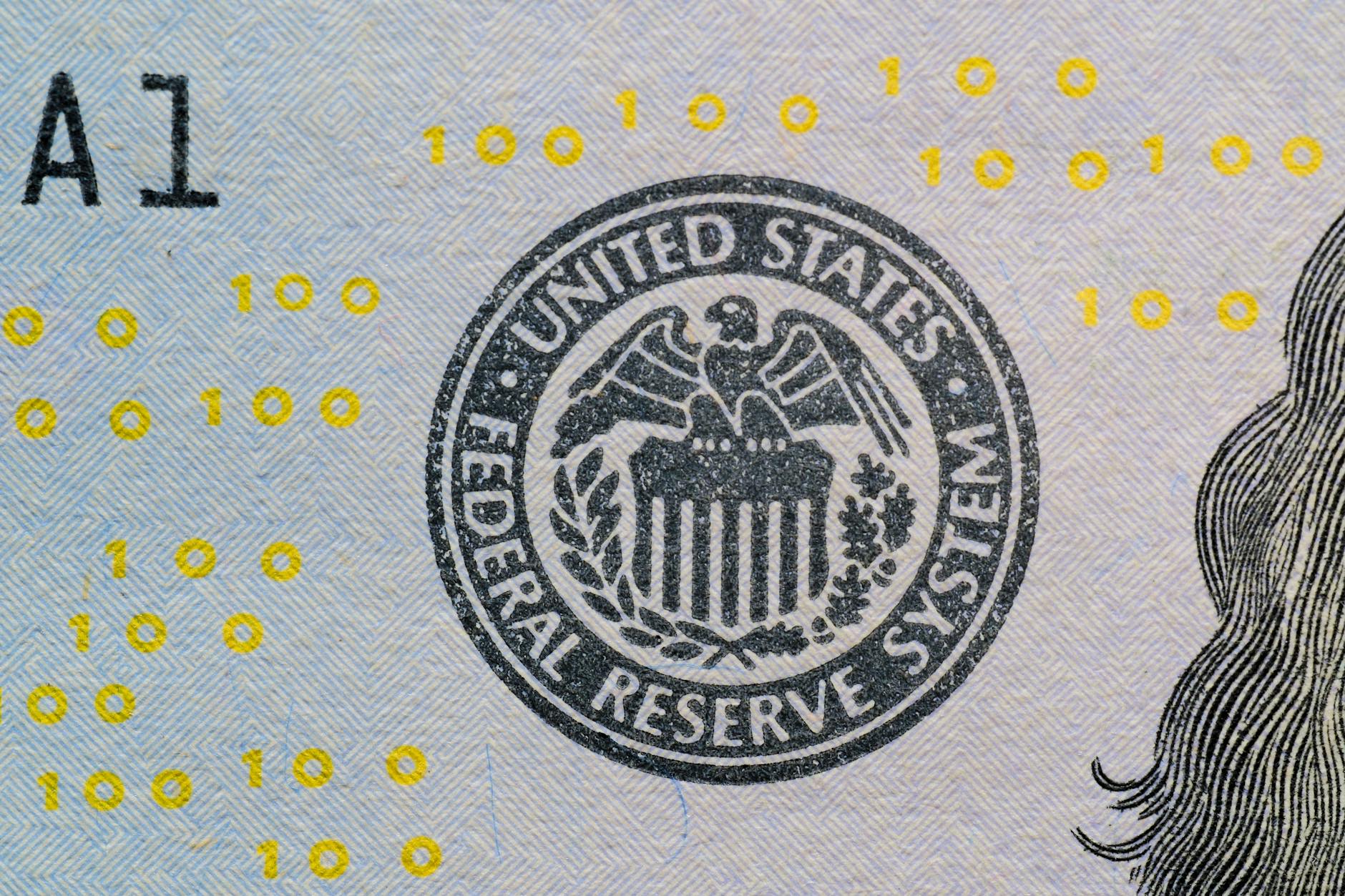

The Hook
The most powerful unelected job in American finance just changed hands — and Wall Street is already recalculating.
On May 22, 2026, Kevin Warsh was sworn in as chairman and a member of the Board of Governors of the Federal Reserve System. Hours later, the Federal Open Market Committee made it unanimous, formally selecting Warsh as its chairman in a vote that sent a signal as loud as the gavel itself.
This isn’t just a ceremonial handoff. Fed leadership transitions are among the most consequential moments in modern macroeconomics — more market-moving, in many cycles, than a single earnings season or even a congressional budget battle. The person sitting at the head of the FOMC table controls the most influential lever in global finance: the federal funds rate. And every word they say, every press conference pause, every carefully chosen adjective in a policy statement, moves trillions.
Warsh’s arrival marks a genuine philosophical inflection point. The Fed doesn’t just set interest rates — it sets expectations. And expectations, as any serious investor knows, are the market. The question isn’t simply what Warsh believes today. The question is how those beliefs will ripple into every mortgage rate, every corporate bond yield, every currency pair traded between now and his first major policy decision.
The era has turned. The real game — figuring out what that means for your portfolio — starts now.
What’s Behind It
The man who just took the wheel
Kevin Warsh is not a stranger to the Fed’s inner machinery. He previously served as a member of the Board of Governors of the Federal Reserve System, giving him a rare institutional fluency that most incoming chairs simply don’t possess. He knows where the bodies are buried — procedurally speaking — and he knows how the committee dynamics work when the pressure is on.
That experience matters more than people give it credit for. The Fed chair isn’t a dictator. The FOMC is a committee, and committees have personalities, coalitions, and fault lines. A chair who walks in cold spends the first year learning the culture. Warsh walks in having already lived it.
The FOMC’s unanimous selection is itself a signal worth reading carefully. Unanimous votes at the Fed are not accidents. They are managed outcomes — the product of alignment, negotiation, or at minimum, the absence of open dissent. That the committee closed ranks immediately suggests either genuine consensus around Warsh’s direction, or a deliberate projection of institutional unity at a moment when markets crave stability above almost everything else.
The Federal Reserve’s official announcement offers the formal record, but the real story is being written in bond markets, in Fed watcher newsletters, and in the quiet recalibrations happening inside every major asset manager’s macro desk right now.
A unanimous FOMC vote isn’t just courtesy — it’s the committee telling markets: we are not divided, don’t test us.
Why the oath itself carries weight
There’s a reason the Fed leads with ceremony. The swearing-in of a Federal Reserve chairman is a public act — a formal, visible transfer of institutional authority designed to anchor credibility before a single policy word is spoken.
Central bank credibility is not a soft concept. It is the core asset the Fed holds. When credibility is high, the Fed can guide inflation expectations with language alone. When it erodes — as it demonstrably did during the post-pandemic inflation surge — the institution has to do far more heavy lifting with actual rate moves, and the economic collateral damage compounds.
Warsh inherits a Fed that spent years rebuilding its inflation-fighting credibility through an aggressive rate hiking cycle. The question now is whether he sustains that hard-won standing, pivots toward accommodation, or charts some third path that the market hasn’t fully priced yet.
The FOMC meeting calendar is already circled on every institutional trader’s desk. Each scheduled meeting becomes, under new leadership, a potential reset moment — a chance for Warsh to define his style and signal his priorities in real time.
Why It Matters
Markets don’t wait for policy — they anticipate it
Here’s what most miss when a new Fed chair takes over: the market impact doesn’t begin at the first rate decision. It begins the moment the confirmation is locked in — and accelerates through every public statement, interview, and congressional testimony that follows.
Bond traders are already building mental models of Warsh’s reaction function. Equity desks are stress-testing their rate assumptions. Currency strategists are repricing dollar strength scenarios based on where they think this new leadership team lands on the hawkish-to-dovish spectrum.
The yield curve — that brutally honest barometer of where sophisticated money thinks rates are heading — will shift with every public signal Warsh sends. A single phrase in a speech, a chosen word in a press statement, can be worth dozens of basis points in market movement. That’s not hyperbole. That’s the documented reality of Fed communication in the modern era.
For equity investors, the calculus runs through the discount rate. Higher-for-longer rate expectations compress valuations on growth stocks and long-duration assets. A pivot toward cuts does the opposite. Warsh’s revealed preferences in the coming months will matter enormously to anyone with meaningful exposure to rate-sensitive sectors — financials, real estate, utilities, and high-growth tech alike.
The broader institutional stakes
Beyond the immediate market mechanics, Warsh’s chairmanship carries institutional weight that extends well past any single policy cycle.
The Federal Reserve’s independence — its ability to make decisions insulated from short-term political pressure — is not a constitutional guarantee. It is a convention, maintained by norms and defended by the credibility of its leadership. In a political environment where that independence has faced more pressure than at any point in recent memory, the character and conduct of the chair matters as much as the policy itself.
- Rate trajectory — Warsh’s first public signals will define whether the market models him as hawkish, dovish, or genuinely data-dependent
- Communication style — press conference tone and language choice will be dissected for philosophical clues in every early appearance
- Committee management — how Warsh handles internal dissent will reveal whether the unanimous selection vote is durable consensus or fragile surface unity
- Regulatory posture — the Fed chair also shapes bank supervision priorities, with direct implications for financial sector stocks
- Fed independence signals — any friction with executive branch pressure will be watched acutely by global bond investors
Each of these dimensions will play out over months and years, not weeks. Investors who are only watching the next rate decision are looking through the wrong lens.
What to Watch
The transition is complete on paper. The real evaluation begins now. Here’s what sharp market participants will be tracking in the weeks and months ahead.
The first major public appearance — whether a congressional testimony, a policy speech, or a post-FOMC press conference — will be treated as a de facto inaugural address by markets. Every sentence will be stress-tested against the hawkish-dovish spectrum. Watch for how Warsh frames the Fed’s dual mandate: if he leads with inflation language, that’s a signal. If he emphasizes employment, that’s a different signal entirely.
FOMC minutes and voting patterns will also take on new significance. Under new leadership, any dissents that emerge — any member who breaks from the chair’s preferred position — will be read as evidence of coalition fractures. Conversely, continued unanimity will be read as Warsh consolidating control and direction.
The FRED economic database will remain the cleanest real-time window into the data Warsh’s team is actually watching — inflation prints, labor market figures, credit conditions, and financial stability indicators. Understanding what the Fed sees is the first step to anticipating what it does.
Beyond the data, watch the geopolitical and fiscal backdrop. A new Fed chair doesn’t operate in a vacuum. Treasury issuance, fiscal deficit dynamics, and global capital flow shifts all constrain and shape what’s actually achievable in monetary policy, regardless of what any chair might prefer in theory.
- First FOMC decision under Warsh — rate move, hold, or guidance shift will define market expectations for the full term
- Congressional testimony tone — language on inflation, employment, and Fed independence will be parsed word by word
- Dissent votes in FOMC minutes — any break from unanimity signals internal policy tension
- Inflation data trajectory — CPI and PCE prints will test how quickly Warsh is forced to show his hand
- Dollar and Treasury yield reaction — currency and bond markets will price Warsh’s credibility faster than any analyst forecast
The bottom line: a new Fed chair is a regime change, not a personnel change. The framework through which every rate, every yield, every risk premium gets evaluated just shifted. Position accordingly — and watch the signals, not the ceremony.
Stay Ahead of the Market
Get our daily finance briefing — sharp insights from 16 trusted sources, delivered free.