Streaming Costs: Are You Paying Too Much?

The Hook
You cancelled cable to save money. Smart move — until you subscribed to Netflix, Hulu, Max, Disney+, Peacock, Paramount+, and that niche horror platform you used exactly once in October. Congratulations. You’ve rebuilt cable. Just worse, and somehow more expensive.
Here’s the number nobody wants to look at: the average American household now spends over $1,000 a year on streaming services. That’s not a typo. That’s a car payment. A round-trip flight to Europe. Four months of groceries for one person. And yet most people, when asked what they pay monthly for streaming, are off by 40% or more — consistently underestimating the total.
This is what financial behaviorists call “subscription blindness.” Small recurring charges feel invisible. $8.99 here. $15.49 there. Your brain doesn’t register them the same way a $200 charge does — but pile six of them together and suddenly you’re staring at a $85-a-month habit you never consciously chose.
The streaming industry built its entire pricing architecture around this psychology. Prices creep up by a few dollars per year. Ad-supported tiers get introduced at lower prices while premium tiers quietly inflate. And the moment you cancel, a retention offer lands in your inbox like a long-lost friend.
Before you can fix it, you need to see it clearly. That means doing the math — all of it, at once. And the picture is almost certainly uglier than you expect.
What’s Behind It
How streaming quietly became a budget leak
The original streaming promise was elegantly simple: one service, one low monthly fee, all the content you’d ever want. Netflix in 2010 cost $7.99. That was it. One subscription. Done. Nobody could have predicted we’d end up in a fractured media landscape where every major studio pulled its content and launched its own competing platform — each demanding a separate monthly fee to access it.
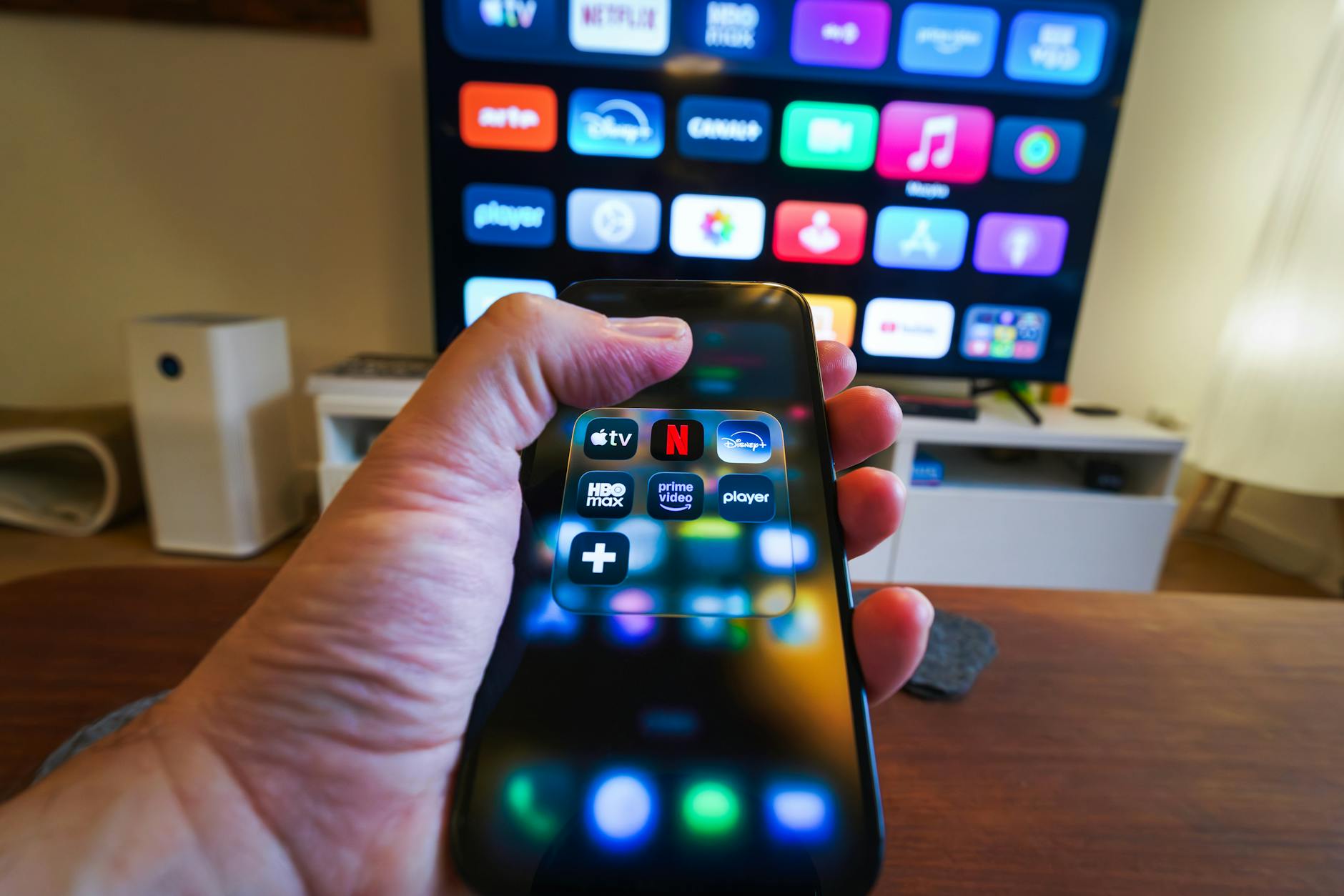
Fast forward to today and the average household juggles between four and five streaming services simultaneously, according to industry data. But the real gut-punch isn’t the count — it’s the compounding. Each platform has been aggressively raising prices. Netflix’s standard plan has more than doubled since 2015. Disney+ launched at $6.99 in 2019 and has since climbed well past $13 for ad-free access. Max, Peacock, and Paramount+ have all followed the same playbook: low introductory pricing to build subscriber bases, followed by steady, confidence-driven rate hikes once the content library deepened and consumer habit formed.
And here’s the mechanism that makes this especially insidious: most of these services auto-renew. There’s no invoice that hits your inbox every month demanding attention. The charge just happens, silently, in the background of your financial life — until you actually audit your credit card statement and realize you’ve been paying for a service you stopped using six months ago.
Streaming didn’t replace cable — it became cable, just sold to you one subscription at a time.
The pricing tiers designed to confuse you
Streaming services have gotten craftier about how they present pricing. Today, nearly every major platform offers at least two tiers: an ad-supported option at a lower monthly rate and a premium ad-free option at a higher one. On the surface, that looks like consumer choice. In practice, it’s a behavioral economics trap.
The ad-supported tier is priced to feel like a bargain — and it is, until you account for the 4-6 minutes of ads per hour you’re sitting through. The premium tier feels extravagant by comparison. So most consumers anchor on the middle option, which is often only $2-$3 cheaper than premium but still carries ads. The platform wins either way.
Then there are the bundle traps. Disney’s bundle combining Disney+, Hulu, and ESPN+ looks like a deal — and compared to subscribing to all three separately, it technically is. But it also locks you into paying for content you may not want (ESPN+ if you’re not a sports fan, for instance) in exchange for a discount that erodes the moment any component raises its price.
The Consumer Financial Protection Bureau has increasingly focused on subscription auto-renewal practices as an area of consumer concern, noting that recurring charges with minimal friction to cancel represent a structural disadvantage for households trying to manage budgets. The industry’s pricing complexity is not accidental — it is engineered.
Why It Matters
Small leaks sink big financial goals
Here’s why this matters beyond the obvious: streaming costs don’t exist in isolation. They compete directly with savings rates, emergency fund contributions, and debt paydown — the financial building blocks that actually determine long-term wealth. A household spending $100 per month on streaming that they could trim to $40 is leaving $720 a year on the table. Invested at a 7% average annual return over 20 years, that’s nearly $40,000. For a $60-a-month discretionary habit.
That’s not an argument for cancelling everything and watching free YouTube forever. It’s an argument for intentionality. The households that build financial security aren’t necessarily the ones who earn more — they’re the ones who have a clear-eyed relationship with where their money actually goes, including the boring recurring charges buried in their bank statements.
Streaming costs are also disproportionately painful for lower-income households. For a family earning $40,000 annually, $100 a month in streaming represents 3% of gross income. That’s not a rounding error — that’s a meaningful share of a constrained budget. And because streaming services don’t offer income-based pricing, the percentage burden falls hardest on those least able to absorb it.
Auditing your subscriptions isn’t a sacrifice. It’s a baseline act of financial self-respect — the same impulse that drives people to shop around for better insurance rates or negotiate their phone bill.
The signals most households are ignoring
But here’s what most people miss: the streaming cost problem is going to get worse before it gets better. The industry is nowhere near done with its pricing evolution. Password-sharing crackdowns — pioneered aggressively by Netflix and now being replicated across the sector — are forcing formerly shared accounts to become paid individual accounts. That’s a structural price increase applied not just to one subscriber, but to millions simultaneously.
- Password-sharing fees are converting casual viewers into involuntary paying subscribers across every major platform.
- Annual plan traps lock consumers into 12-month commitments that are easy to forget and expensive to exit early.
- Bundle price creep quietly raises the cost of multi-service packages as individual components increase their standalone rates.
- Free trial expiration silently converts to paid subscriptions, often months after the original sign-up is forgotten.
The Federal Trade Commission has been actively scrutinizing what it calls “negative option marketing” — subscription models where inaction (not cancelling) equals consent to ongoing charges. New rules proposed by the FTC aim to make cancellation as easy as sign-up. But regulatory timelines are slow, and the billing cycles on your credit card are not.
What to Watch
The strategic move here is simple, even if it requires 20 minutes of uncomfortable honesty with a credit card statement. Start by pulling every recurring charge from the last 90 days and categorizing them. You will almost certainly find at least one service you forgot you were paying for. According to consumer research cited by NerdWallet’s streaming calculator tool, most households discover 1-2 “zombie subscriptions” — services they aren’t actively using — in any given audit.
From there, the framework is straightforward: watch, rotate, or cut.
- Watch the price-hike calendar — Netflix, Disney+, and Max have all signaled continued pricing pressure; don’t assume today’s rate is permanent.
- Rotate strategically — binge a platform for one month, cancel, move to the next; most services make rejoining frictionless.
- Cut the dormant subscriptions — if you haven’t actively watched something in 30 days, that’s a subscription for your future self, not your present one.
- Audit your bundles — are you actually using every component, or paying for the illusion of a discount?
- Set a calendar reminder — the single most effective habit is a quarterly subscription audit, timed to coincide with a credit card statement review.
The broader signal worth monitoring: streaming industry consolidation is accelerating. Mergers, acquisitions, and platform shutdowns mean the content landscape will keep shifting — and consumer pricing will shift with it. Staying passive is the most expensive choice you can make.
The GatsBeaN Desk will continue tracking how streaming pricing trends intersect with household budget pressure. Because the question isn’t just what you’re watching tonight — it’s what it’s costing you over a lifetime of quiet, automatic renewals.
Stay Ahead of the Market
Get our daily finance briefing — sharp insights from 16 trusted sources, delivered free.
Dig Deeper
This article is for informational purposes only and does not constitute financial, tax, or legal advice. Consult a qualified professional for guidance specific to your situation.